Education Is Changing Faster Than the Classroom: Why Learning Must Evolve
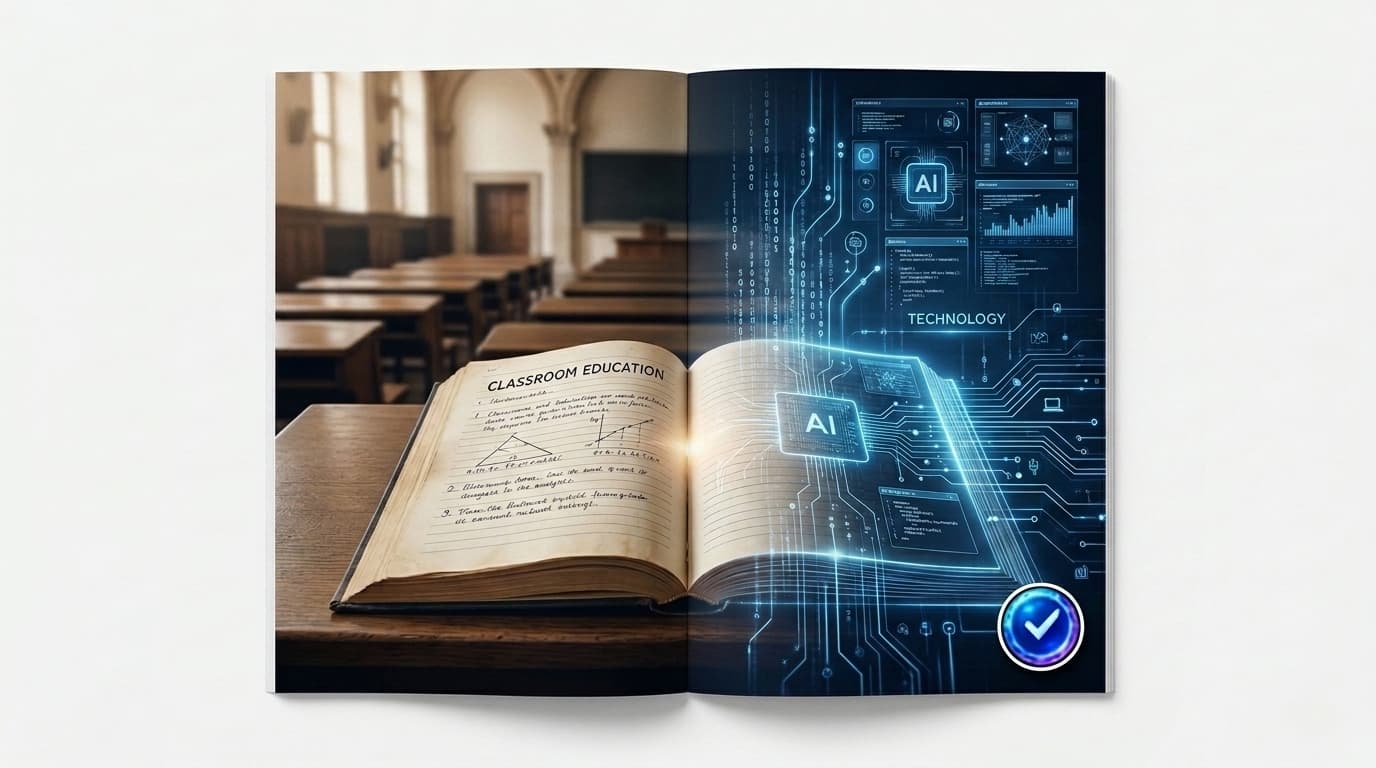
Technology is transforming how we work, communicate, create, and solve problems. Artificial intelligence is changing professional workflows. Blockchain is introducing new ways to establish ownership and verify information. Automation is reshaping business processes. Entire categories of skills are emerging faster than traditional educational systems can consistently incorporate them.
Yet much of the structure of education remains familiar: enroll in a program, complete a prescribed curriculum, earn a qualification, and enter the workforce.
That model has served generations of learners. But an increasingly important question is emerging:
What happens when the skills required for tomorrow's opportunities change faster than the systems designed to teach them?
At Student Center, we believe answering that question requires thinking differently about education—not simply about how credentials are issued, but about how people learn, demonstrate their abilities, and continue developing throughout their lives.
The Growing Gap Between Education and Emerging Skills
Universities and educational institutions face a difficult challenge.
Building quality educational programs takes time. Curricula require development, academic review, qualified instructors, assessment methods, and institutional approval.
Technology, meanwhile, does not wait for an academic calendar.
New AI capabilities can emerge in months. Blockchain infrastructure evolves continuously. Cybersecurity practices change in response to new threats. Digital finance introduces tools and business models that may not have existed when a student began a multiyear degree.
This creates a potential mismatch between what learners study and what employers increasingly need.
The answer is not to abandon traditional education. Foundational knowledge, critical thinking, communication, ethics, and disciplined reasoning remain essential.
Instead, the opportunity is to complement those foundations with more flexible ways to acquire and demonstrate emerging skills.
Learning Should Be Continuous, Not Confined to a Degree
For much of modern history, education has been organized around relatively distinct stages of life.
People attend school, enter the workforce, and occasionally return for additional training.
But consider the professional entering today's workforce.
An accountant may need to understand digital assets and AI-assisted financial analysis. A marketing professional may need skills in generative AI and automation. A software developer may need to understand intelligent agents and decentralized infrastructure.
These capabilities may not have been central to their original education.
Increasingly, professional development cannot be treated as an occasional activity. It needs to become an ongoing part of career progression.
This is where shorter learning experiences, specialized programs, and stackable learning paths can become valuable.
Instead of requiring every new competency to fit within a traditional degree program, educational institutions can offer targeted opportunities that help learners build relevant skills over time.
A student might begin with introductory AI literacy, progress into practical automation, and eventually demonstrate competence through an applied project. Each achievement becomes part of a broader learning journey.
From Course Completion to Demonstrated Capability
Completing a course is valuable. But course completion and practical proficiency are not necessarily the same thing.
As technology becomes more integrated into professional work, learners benefit from opportunities to demonstrate what they can actually do.
Consider two learners studying artificial intelligence.
One completes a series of lectures and quizzes explaining AI concepts.
The other completes those same foundational lessons and then builds a working automation, documents the process, evaluates the results, and explains the limitations of the technology.
Both have learned something. But the second learner has also produced evidence of applied skills.
Educational programs can increasingly incorporate projects, practical assessments, simulations, and portfolios alongside traditional instruction. These experiences help learners connect knowledge with real-world applications.
They can also provide employers and institutions with more meaningful information about the skills a learner has developed.
Credentials Need to Evolve Alongside Learning
Traditional transcripts and certificates remain important records of achievement.
But as learning becomes more continuous and distributed across institutions, employers, and specialized training providers, credentialing faces new challenges.
- How can learners organize achievements from multiple sources?
- How can an employer verify a credential?
- How can a professional demonstrate skills acquired after graduation?
- How can institutions maintain meaningful relationships with learners throughout their careers?
Digital credentials offer one potential part of the solution.
When properly designed, verifiable credentials can help learners share evidence of achievement while allowing recipients to confirm important information about the credential and its issuer.
Blockchain technology can support some of these systems by providing a persistent record that helps establish provenance and verification.
However, technology alone does not make a credential meaningful. The value of a credential still depends on the quality of the education, the credibility of the issuer, and the rigor of the assessment. A verifiable record is most useful when it represents a genuine achievement.
The Opportunity for Universities
The evolution of education presents an opportunity for universities rather than simply a competitive threat.
Institutions already possess significant strengths: educational expertise, trusted brands, established communities, academic resources, and relationships with employers.
By combining these strengths with more flexible learning infrastructure, universities can expand how they serve students and graduates.
Imagine an institution that offers:
- Short learning paths focused on emerging technologies
- Applied projects that demonstrate real-world capabilities
- Digital badges and verifiable credentials for specific achievements
- Continuing education opportunities for alumni
- A connected environment where learners can organize and share their accomplishments
- Stronger connections between educational achievements and career opportunities
These experiences can complement degree programs while extending the institution's relationship with learners well beyond graduation.
The result is not simply a more modern transcript. It is a more continuous educational ecosystem.
Why We're Building Student Center
Student Center is being developed around a straightforward belief:
Learning should be accessible, relevant, demonstrable, and connected to opportunity.
On-chain credentials are one component of that vision, but they are not the entire mission.
We see an opportunity to bring together educational content, emerging technology learning paths, digital achievements, and professional development experiences.
Our ambition is to help educational institutions and learners navigate a world where the skills that matter continue to evolve.
The Future of Education Is More Connected
The future of education will not be defined by a single technology. It will be shaped by institutions, educators, employers, and learners finding better ways to connect knowledge with practical capability.
Degrees will continue to matter. So will certifications, apprenticeships, projects, professional experience, and independent learning.
The challenge is making these different forms of achievement more accessible, understandable, and useful.
Education must remain rigorous. But it can also become more flexible. Learning must remain meaningful. But it can also become more continuous. And credentials must remain trustworthy. But they can become easier to share and verify.
At Student Center, we're building toward that future.
Because education shouldn't stop evolving while the world around it accelerates.
Student Center is developing learning and credentialing infrastructure designed to connect education, digital achievements, and professional opportunity.
